

13ThingsLA: December 31
Reorientation for your art calendar


It’s a new year this week in case you forgot, and if nothing else, that’s the perfect time for a reorientation—of priorities, perspectives, and power structures. For your art calendar this week, we consider new and ongoing exhibitions at MOCA / The Brick; Wonzimer Gallery, Musee du Al, Matter Studio Gallery, Villa Aurora / 18th Street, bG Gallery / Sparks Gallery, Koplin del Rio, M+B Gallery, The Landing, Tyler Park Presents, David Zwirner Gallery, Philip Martin Gallery, and a very special Rose Parade. And if you haven’t subscribed yet, now is a great time to get in the know.
FEATURED REVIEW
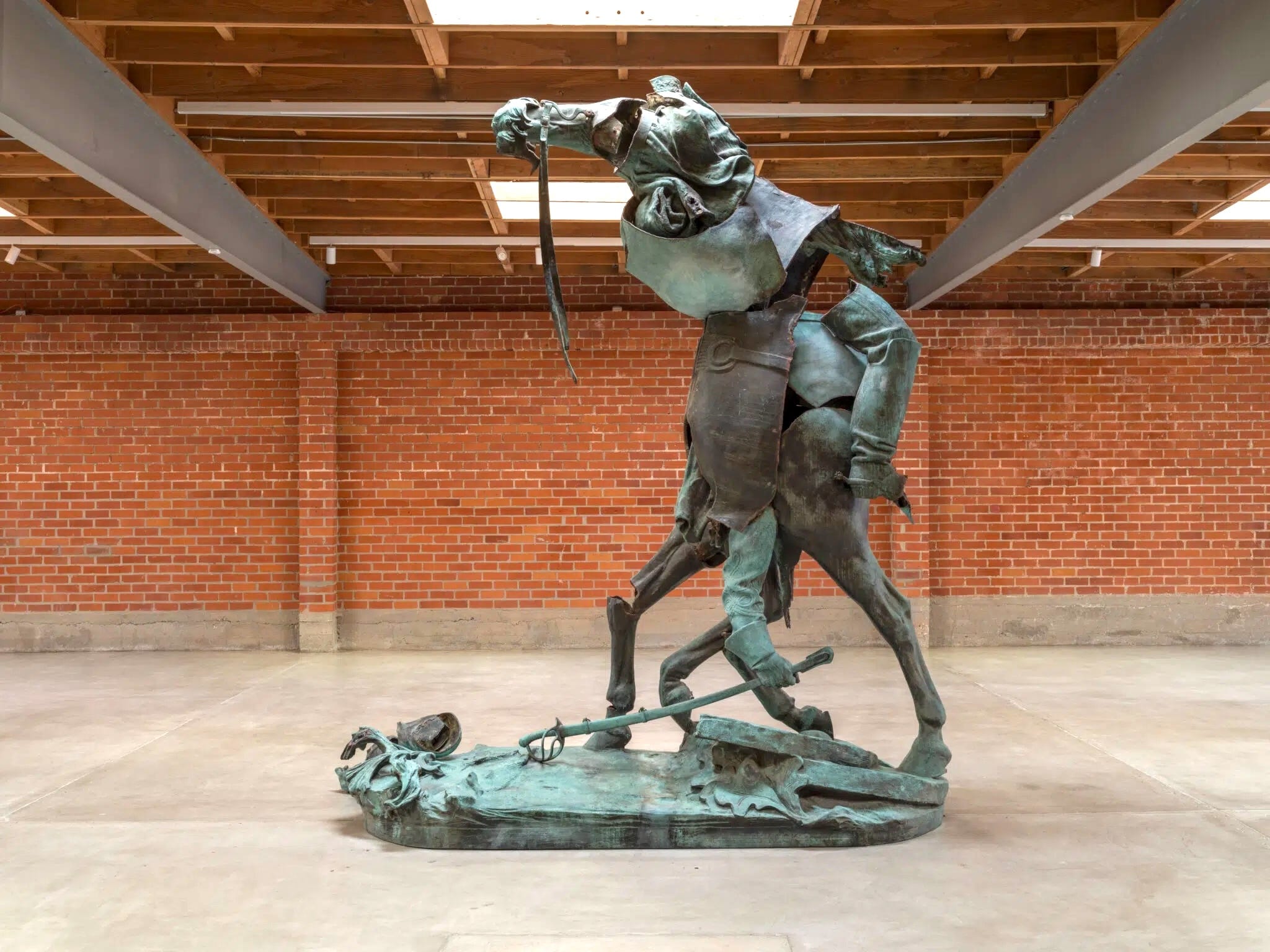
MONUMENTS at MOCA & The Brick. Arguably the most talked about show of 2025, you probably don’t need me to tell you much more about this ambitious, affecting landmark (pun intended) exhibition’s philosophical premise. But given the amount of well deserved attention paid to the operatic presentations of literal, actual decommissioned monuments—vigorously modified both during and after the last decade’s protests which dismantled them—I thought I’d spend some time with the impressive contributions of new, contemporary and historical work which gives the gravitational pull of the erstwhile statuary a fuller, more complete context and range of paths forward toward a more nuanced vision of reckoning and repair. Alone at The Brick, Kara Walker’s Unmanned Drone stands apart in its refusal of aesthetic consolation—it offers a mangled and mutilated form that renders violence unmistakably visible, transforming what was once an object of beauty celebrating hidden ugliness, into an object of horror that, while not quite beautiful, at least looks like consequences.
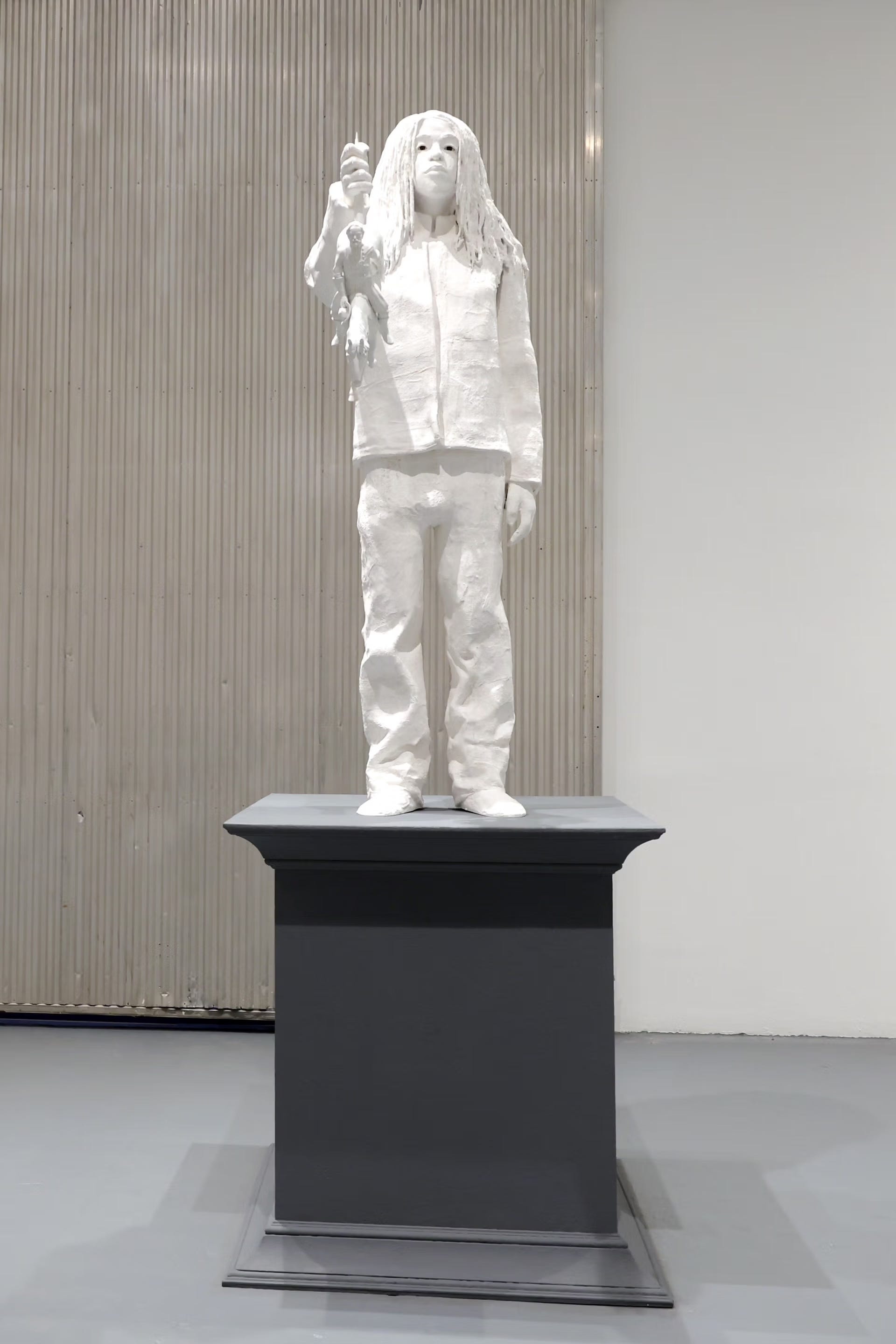
The bulk of MONUMENTS unfolds across MOCA’s Geffen Contemporary as a dense, emotionally volatile field rather than a didactic survey, its lasting power accumulating through juxtaposition, resonance, and tonal variation. While decommissioned and defaced Confederate statues provide an undeniable narrative touchstone—bronze bodies stripped of authority, smeared with the residue of public rage—the exhibition’s deeper intelligence emerges through the contemporary works that absorb, reroute, and reimagine the visual grammar of memorialization itself. Leonardo Drew’s immense white cube, constructed from processed cotton, adopts the solemn mass and reverent posture of civic memorials, while quietly relocating monumentality into material history, labor, and racial injustice. Jon Henry’s large-scale photographs stage Black mothers cradling their sons in poses drawn from Renaissance Pietàs, collapsing art history and contemporary violence into images that are neither sensational nor illustrative, but devastating in their restraint—grown men held with the weight of both love and consequence. Karon Davis’s Descendant occupies the statuary vernacular with deliberate clarity, placing a young Black figure into a language long reserved for sanctioned heroism, its stillness and scale allowing the work to operate less as a provocation than as a welcome meditative recalibration.


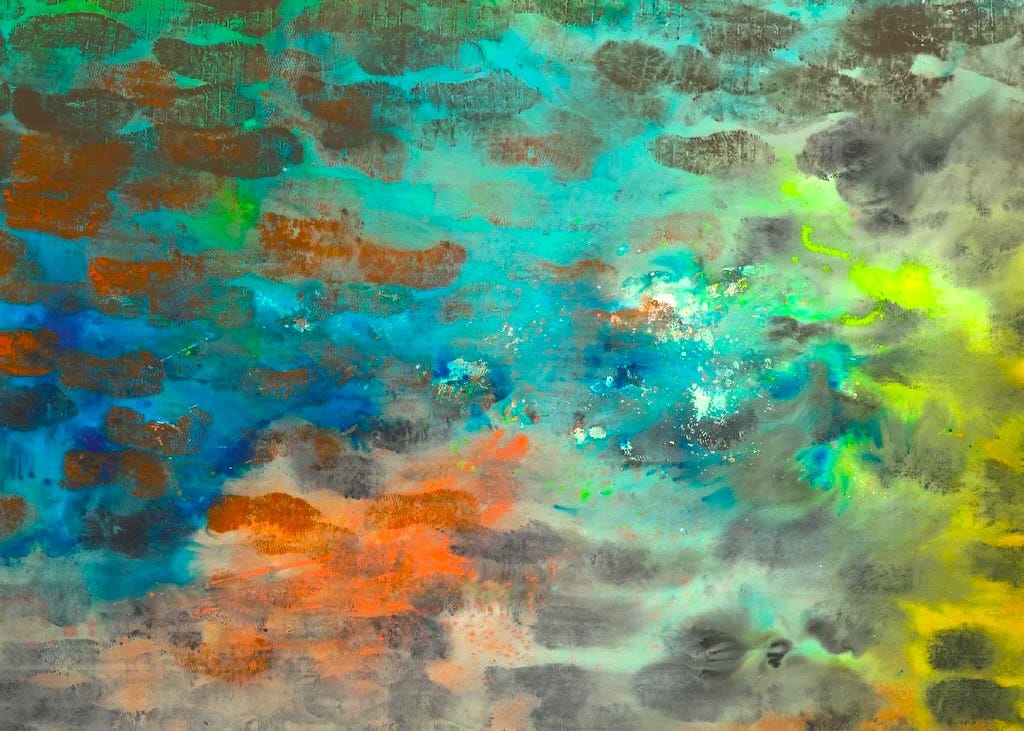
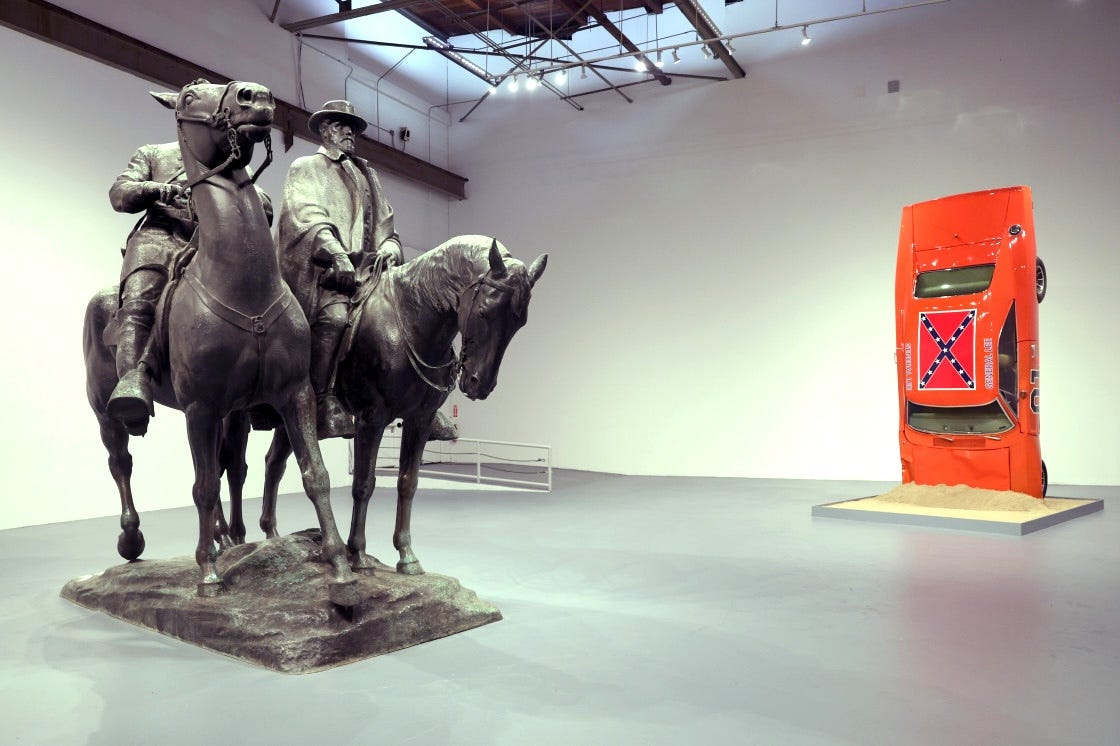
Throughout the galleries, Cauleen Smith’s video installation threads the exhibition with a quiet, persistent call-and-response, its live feeds and breadcrumb structure tracing how monumentality functions as propaganda, ritual, and repetition across time; as unexpected registers continue to surface. Hugh Mangum’s early twentieth-century photographs, originally commercial portraits, reveal an ethics of proximity that feels radical in retrospect—Black and white sitters sharing the frame with an unforced equality, accidental double exposures producing ghostly overlays that read as hauntingly prescient. Elsewhere, a graffitied statue of Robert E. Lee and Stonewall Jackson’s backside humiliation punctures any lingering aura of power with physical comedy and blunt truth; while in the same room, Hank Willis Thomas’s Confederate-flagged car, nose-down in the earth, introduces a sharp note of visual wit, its own art-historical echoes inseparable from pop culture context. Davóne Tines and Julie Dash’s Homegoing offers a necessary tonal respite; its musically radiant, formally generous, and quietly exultant video installation introduces joy without erasing grief, allowing sound and duration to hold mourning in a register of convocation and love. Walter Price’s abstract paintings, composed through footstep marks and liquid surfaces, evoke water, passage, and ceaseless movement, their beauty inseparable from histories of displacement, reminding us that monuments do not speak on their own
NB: Tickets are $18 at MOCA but free at The Brick; MOCA’s next First Friday (aka free admission day) is January 2; there are also really enlightening Talking Tours there, Saturdays & Sundays at 11:30am & 2pm. The Brick is always free, but you have to make a reservation, because it’s timed so no more than 6 people are in the gallery at once; On view through May 3; moca.org; the-brick.org. —SND
